ADA Portable Bathroom Requirements Every Rental Planner Ought To Testimonial
If you have ever been responsible for bathroom preparation at an event, short-term worksite, public event, or seasonal operation, you currently recognize just how rapid portable hygiene choices can become demanding. The pressure generally lands all at once. Head count changes. The website shifts. A delivery van needs a different entry. Then a person asks the question that must have been worked out a lot earlier: do we have the appropriate accessible system, in the best location, established the right way?
That inquiry matters much past logistics. An ada mobile toilet is not just an additional line product on a rental order. It becomes part of whether visitors, employees, participants, and members of the general public can use the website with self-respect and independence. When planners deal with ease of access as a last-minute add-on, they commonly end up with an expensive shuffle and a setup that still drops short.
The great news is that the core requirements are not mystical. They do, however, are entitled to cautious review. A compliant order is about greater than asking for one larger system. Placement, path, entry conditions, identification, and the number of easily accessible units in a collection all matter. Those details are where rental strategies generally do well or fail.
The need that obtains missed out on most often
The point I see neglected frequently is easy: when portable single-user bathroom units are provided in a collection, a minimum of 5 percent of the devices because collection have to be accessible. That basic applies even at temporary events.
That catches individuals off guard since short-lived configurations frequently obtain treated as casual. An organizer might presume a weekend event, a temporary activation, or a pop-up operations website has looser assumptions than a permanent facility. It does not work in this way. Short-term does not suggest exempt. If you are bringing in a bank of single-user mobile bathrooms for public use, the accessible matter needs to be part of the first calculation.
This is where a great deal of little planning mistakes begin. Somebody approximates 8 typical systems, after that later on tacks on one ada available mobile restroom since it really feels sensible. Occasionally that winds up pleasing the 5 percent minimum. Occasionally the math adjustments when the order expands. If the cluster increases and nobody takes another look at the easily accessible count, the website can drift out of compliance without any person observing until shipment day.
The much better behavior is to calculate access every single time the quantity adjustments. It seems evident, however on active tasks, the bathroom matter is among one of the most often changed numbers on the page.
"Easily accessible" is not almost device size
A larger cabin alone does not automatically satisfy the ADA criteria. This is the second error that rental organizers make under schedule pressure. They purchase what is described in informal sales language as a handicap unit, a wheelchair unit, or a larger trailer delay, and presume that is enough.
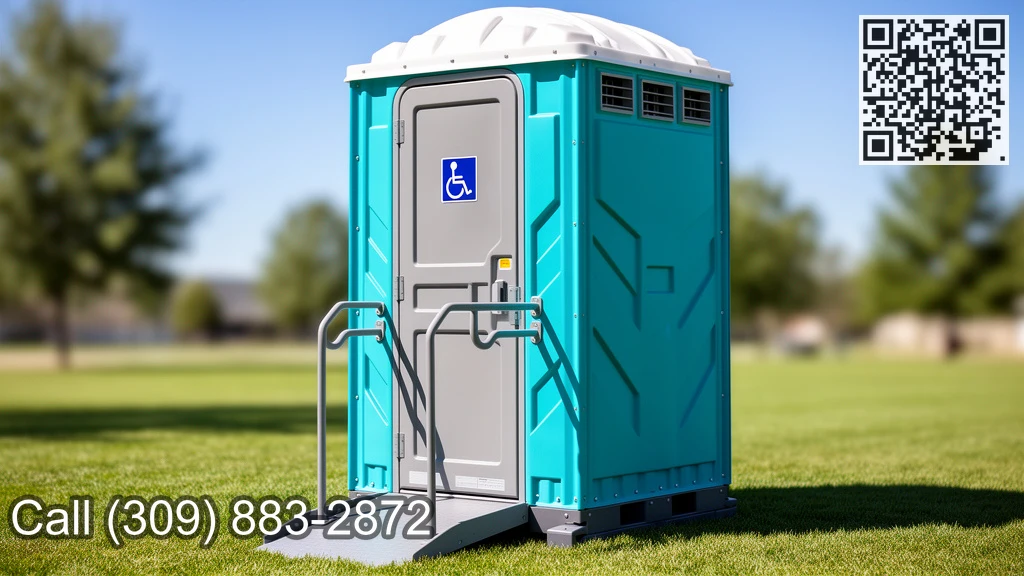
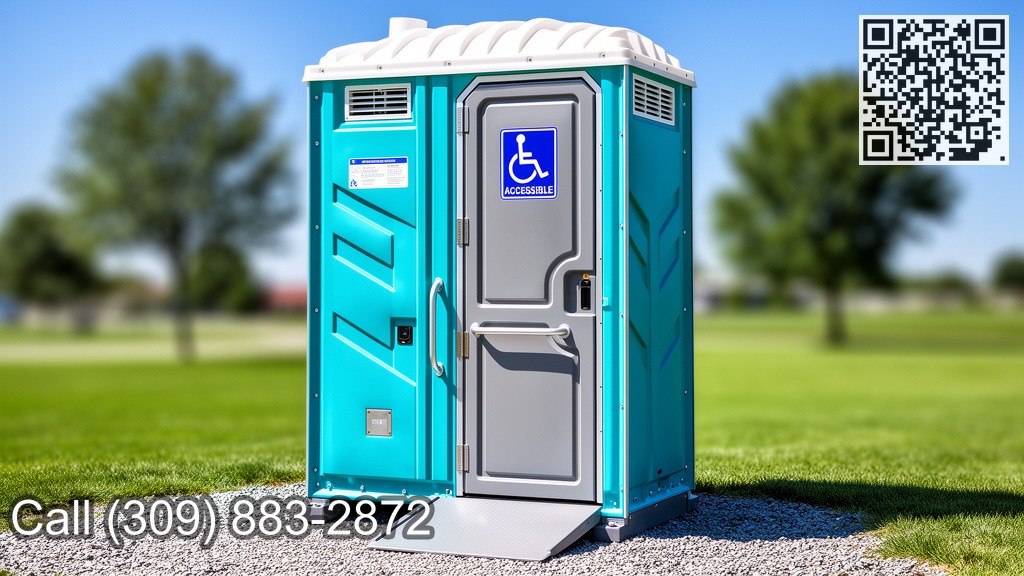
What really matters is whether the ada certified mobile toilet or ada mobile restroom fulfills the appropriate technical requirements. The government criteria need obtainable mobile toilet devices to meet toilet-room technical requirements, including clearances, turning space, and door maneuvering clearances, in addition to relevant policies for grab bars and water-closet clearances. The unit should additionally have an obtainable entryway and be reached by an available route. If ramps or touchdowns are needed, those features should abide by ADA technological needs as well.
That indicates access is about the whole user experience from approach to departure. A device can be marketed as an ada compliant accessible portable restroom, however if it is dropped on a spot of ground that a wheelchair user can not reasonably get to, the arrangement still has a trouble. The exact same is true if the entryway location is obstructed, unpredictable, or arranged in a manner that defeats the required handling space.
This is where seasoned planners find out to stop assuming in regards to equipment only. The rented device matters, naturally, but so does the website plan around it.
The path to the device matters as much as the device itself
An easily accessible route is not an afterthought. It is just one of the core demands, and on short-lived websites it is frequently the hardest component to get right.
Portable bathrooms are often positioned where vehicles can discharge quickly, where they run out the visual center of an event, or where service access is easiest. Those practical problems are genuine. Anyone that has handled restroom servicing understands the value of tidy vehicle accessibility and efficient positioning. Yet a place that benefits maintenance is not automatically obtainable for users.
A certified ada portable toilet rental arrangement needs to consider whether a person using a wheelchair or various other wheelchair tool can actually reach the unit and enter it. If the route crosses unequal ground, soft soil, a high modification in grade, or short-lived barriers, that can undermine the setup. If a ramp or landing becomes part of the installment, it likewise has to adhere to the ADA technical rules.
That sounds uncomplicated up until weather condition gets entailed. I have actually seen perfectly reasonable website layouts become pointless after a day of rainfall. Crushed rock changes. Lawn softens. Momentary floor covering panels twist at their joints. None of that transforms the accessibility obligation. It only means the planner https://sergiordim177.rivertonbrief.com/posts/ada-mobile-bathroom-rental-available-path-demands-made-simple must have prepared for website problems earlier and checked them once again prior to opening.
This is one factor final bathroom relocations tend to produce trouble. Relocating the devices to address one issue commonly produces another. A much better approach is to stroll the course from the customer's perspective prior to the final positioning is approved.
Identification is not a minor detail
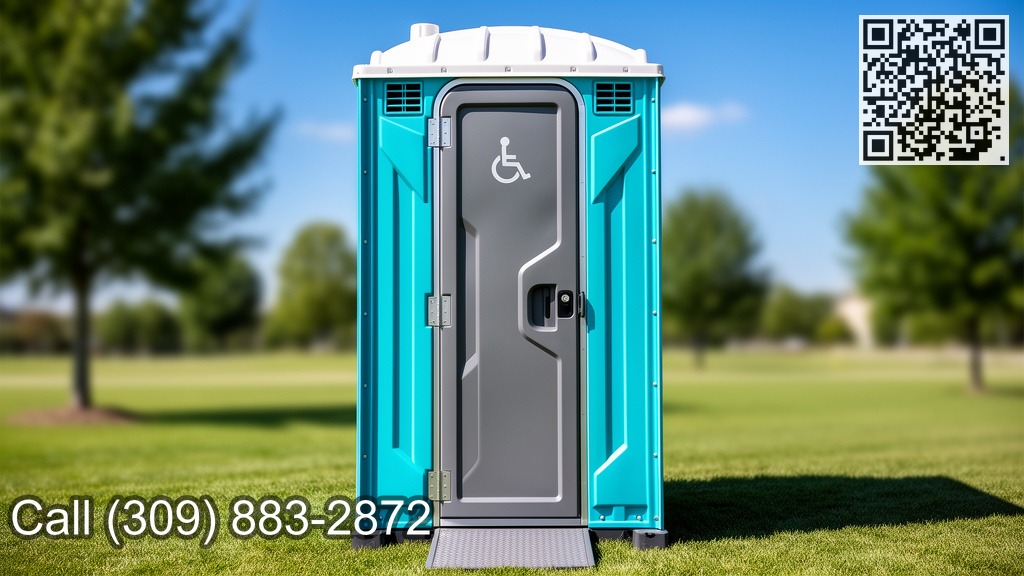
Accessible mobile bathroom devices have to be understood the International Symbol of Availability. That need is simple to please, yet it is surprisingly easy to disregard when orders are customized in a thrill or when devices are switched near the delivery date.
The identification matters for a practical reason. People need to be able to discover the available unit without thinking, without asking team, and without inspecting every door in a row of mobile bathrooms. On a jampacked website, clear recognition saves time and decreases frustration. It also signals that access was taken into consideration deliberately, not improvised.
I have actually seen available units positioned behind fence runs, tucked too much from the rest of the collection, or kipped down a way that hides the identifying sign from the primary web traffic course. Even when the appropriate system is practically existing, bad placement can make it functionally difficult to situate. A coordinator who examines only the documentation misses out on that reality.
Construction sites have a narrow exception, and it needs to not be overread
There is a vital nuance in the standards that is entitled to treatment. The ADA standards identify portable bathroom systems at building and construction websites that are made use of solely by building workers. Those systems are excluded from the portable-toilet access scoping requirement referenced in the 1991 standard.
That is a narrow point, and planners should beware with it. It does not erase availability requirements for basic mobile bathroom rentals, and it should not be extended to cover scenarios it was not implied to cover. If the rental is for broader public use or for settings outside that exclusive construction-personnel context, the accessible-unit requirement continues to be relevant.
This is a location where I often see complication because individuals hear "construction site" and stop paying attention to the remainder of the sentence. The exclusive-use aspect matters. So does the difference between a crew-only setup and a site that offers site visitors, clients, examiners, or the general public. If an usage situation falls outside the slim exemption, treating it as excluded can create unneeded lawful and operational risk.
Why momentary events are particularly at risk to mistakes
Permanent buildings generally have layers of testimonial. Illustrations get checked. Facilities groups ask inquiries. Accessibility issues are most likely to surface area before opening. Momentary mobile toilet setups hardly ever get that degree of examination, despite the fact that the legal criteria still apply.
Event preparation particularly tends to compress decisions into a short timeline. An enroller desires a footprint adjustment. Food vendors need more space. Parking changes after authorization evaluation. Protection demands barriers. Someplace in that churn, the washroom bank obtains pushed to an edge that looked penalty on a map and verifies unpleasant on the ground.
That is why numerous ada certified portable restrooms issues are not remarkable failings. They are buildups of tiny oversights. The available system exists, but the path is inadequate. The count was proper on the very first variation of the order, but not after development. The system meets the needed technological principle, however signage is not visible. Each problem looks minor in isolation. Together, they leave customers with a discouraging or unusable setup.
An understanding planner discovers to test the setup with actual individuals in mind, not simply with a website diagram.
What a careful testimonial ought to cover before delivery
There is no demand to turn bathroom purchasing into a lawful workshop. But there does require to be a regimented testimonial before the trucks roll.
A helpful pre-delivery check should verify the following:
- The variety of available systems in each collection meets the 5 percent minimum for mobile single-user toilets.
- The selected ada compliant mobile toilets are actually intended to satisfy ADA access requirements, not merely called larger units.
- The path to every available device comes, and the entrance problem sustains use.
- Any ramp or landing needed for access is being taken care of in such a way that complies with ADA technological requirements.
- The available system will be understood the International Symbol of Accessibility and placed where individuals can easily discover it.
That short testimonial catches the majority of the avoidable errors I see in short-lived bathroom preparation. It likewise assists different tools concerns from site problems. Vendors can supply an ada-compliant portable toilet, yet the coordinator still controls where and exactly how that device is installed.
Vendor conversations that deserve having early
Many rental issues start with vague language. Somebody asks for a handicap device. Somebody else lists "ADA restroom." The order obtains refined, but the assumptions remain blurry. Then the website group uncovers far too late that they never verified the path, the identification, or the number of accessible systems were required in the cluster.
A better vendor conversation is direct. Ask specifically for an ada compliant portable toilet or ada-compliant portable restrooms suitable for the planned use, and after that chat through the site problems. The factor is not to concern the vendor with every responsibility. It is to see to it everyone is solving the very same problem.
In method, the best rental connections are the ones where the client shares enough context. Is this a public event? A short-lived procedures website? A cluster near food service? A vast website with multiple washroom financial institutions? Those details shape exactly how availability ought to be planned.
What you want to avoid is the all-too-common circumstance where the available unit gets here, practically feeds on the invoice, and still can not serve individuals well due to the fact that nobody talked about the positioning realities.
The phrase "simply obtain one ADA system" can lead you astray
That phrase seems efficient, however it can hide numerous different mistakes.
First, one ada handicap easily accessible portable restroom may not be enough if the cluster size has grown. Second, "one ADA system" says nothing about whether it will certainly be obtainable by an obtainable path. Third, it does not resolve whether the unit is effectively determined. Ultimately, if there are several bathroom collections on a site, focusing on one easily accessible unit in one area can neglect the functional experience of customers who might be no place near it when they need it.
This is a judgment problem greater than a mathematical one. The requirements offer the framework, yet genuine preparation still calls for thoughtful positioning. A website can fulfill the minimum matter demand and still be frustrating if the accessible unit is isolated or tough to get to from major task zones.
That does not indicate you invent added policies. It suggests you utilize sound judgment within the established demands. Availability ought to be incorporated into the customer circulation of the website, not handled like an afterthought tucked behind a tent line.
Broader enforcement fads are a pointer, not a distraction
Accessibility compliance is being applied in a more comprehensive setting throughout fields. Current government guidance activity around electronic access for state and city government entities is a great suggestion that ADA compliance is not inactive or symbolic. Different contexts have various deadlines and technological problems, but the bigger message coincides: accessibility responsibilities stay active and visible.
For rental planners, the lesson is not that mobile toilet regulations transformed as a result of internet accessibility advice. They did not. The lesson is that access is worthy of sustained interest throughout procedures, not periodic interest when an issue shows up. Groups that comprehend this have a tendency to plan much better in every momentary setting, due to the fact that they quit treating ADA problems as niche concerns.
I have actually discovered a functional difference in between companies that believe by doing this and those that do not. The initial group asks ease of access questions throughout preparing meetings. The second group inquires at delivery. By that factor, options are narrower and prices typically rise.
Common problem spots on genuine sites
Most ease of access failures in portable toilet preparation are not rooted in bad intent. They originate from regular job rubbing, particularly when numerous suppliers and area teams are moving quickly.
The trouble places I watch most carefully are these:
- A collection count adjustments, yet nobody recalculates the accessible-unit requirement.
- The accessible unit is positioned on a path that looks passable on paper yet not in real site conditions.
- A system is identified casually as ADA-capable without verifying that it is indicated to please suitable accessibility requirements.
- The determining ease of access symbol is missing, blocked, or tough to see from the major approach.
- The group concentrates on shipment and maintenance convenience while forgeting the real user method and entryway experience.
None of these troubles are unique. They are common, avoidable, and expensive to repair late.
A coordinator's mindset matters greater than a perfect script
Every momentary site is a bit various. A county fair has different restrictions than a roadway race. A public jobs presenting area differs from an outside wedding celebration venue. That is why stiff manuscripts commonly stop working. Still, the ADA basics for portable bathrooms continue to be secure enough that every coordinator ought to keep them close at hand.
Think in collections, not simply private systems. Believe in paths, not just supply. Think in individual experience, not just conformity phrasing. And when there is any ambiguity about configuration problems, resolve it before the devices are placed.
This kind of care often tends to show up in small choices. You review the modified commode matter after presence forecasts alter. You stroll the path after rainfall. You examine that the icon is visible from where individuals are really coming from. You discover whether a proposed location is practically offered yet almost unpleasant. That is what experienced preparation looks like on the ground.
A correctly selected ada mobile restroom or ada-compliant mobile toilet is not a politeness. It is a need in the contexts where the standards use, and it is part of making a short-term site usable for everyone that requires it.
Rental organizers who examine these details early usually find that access is not the hardest part of the task. It is the part that compensates foresight. When it is dealt with well, people may hardly see. They simply make use of the site as they should have the ability to. Which silent normalcy is commonly the clearest sign that the preparation was done right.
 Ask ChatGPT
 Ask Grok
 Ask Perplexity
 Ask Claude
 Ask Google AI
 Ask You